
Why Crypto Payments are the Biggest Trend in Latin America

In Brief
- Mercado Pago’s bid for a digital banking license in Argentina signals deeper crypto integration in Latin America.
- Binance Pay’s integration with Brazil’s Pix system boosts seamless crypto payments for users.
- Economic instability and mistrust in traditional financial systems drive Latin Americans toward crypto for financial independence.
Crypto adoption has skyrocketed in Latin America over the past year. Yet, unlike most regions, the LATAM population is more driven by the promise of ‘economic freedom’ rather than its speculative traits.
Recent developments, like Binance Pay’s expansion in Brazil and Mercado Pago’s application for an operating license in Argentina, reinforce this trend. In a conversation with BeInCrypto, representatives from CoinFlip, Bitcoin Argentina, and Paybis discussed how unstable economic conditions have prompted the region’s rapid growth of crypto payments
Binance Pay and Mercado Pago Take the Lead in LATAM
May was a bustling month for expanding crypto services in Latin America. Over the weekend, Mercado Pago, the region’s largest online payment platform, announced its application for a full digital banking license from Argentina’s Central Bank.
This license would enable a wider range of traditional financial services, including more sophisticated investment tools, credit lines, and fully regulated accounts.
This move signifies a significant step in Mercado Pago’s deeper integration into another major Latin American market, building upon its established operations in Brazil, Mexico, and Chile.
While Mercado Pago already offers crypto payment services to clients in countries with existing operations, obtaining a banking license in Argentina could facilitate similar offerings within a more comprehensive and regulated banking framework.
Meanwhile, Binance Pay recently integrated with Pix, Brazil’s widely used instant payment system. This direct connection enables Binance users to instantly convert over 100 cryptocurrencies into Brazilian Reais for seamless payments or transfers.
Both developments confirm Latin America’s significant shift toward crypto as users increasingly seek alternative financial experiences beyond traditional systems.
Get to know Godleak
Godleak crypto signal is a service which provide profitable crypto and forex signals for trading. Godleak tried to provide you signals of best crypto vip channels in the world.
It means that you don’t need to buy individual crypto signal vip channels that have expensive prices. We bought all for you and provide you the signals with bot on telegram without even a second of delay.
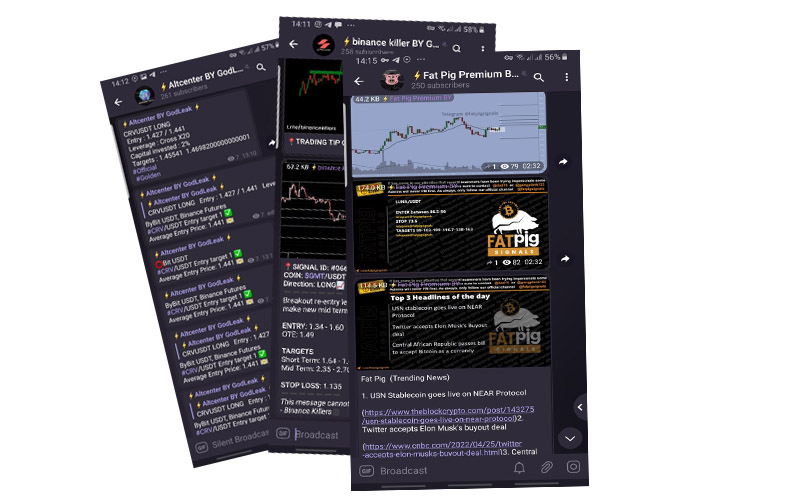
Godleak crypto leak service have multiple advantages in comparision with other services:
- Providing signal of +160 best crypto vip channels in the world
- Using high tech bot to forward signals
- Without even a second of delay
- Joining in +160 separated channels on telegram
- 1 month, 3 months , 6 months and yearly plans
- Also we have trial to test our services before you pay for anything
For joining Godleak and get more information about us only need to follow godleak bot on telegram and can have access to our free vip channels. click on link bellow and press start button to see all features
Join for Free
☟☟☟☟☟
https://t.me/Godleakbot
Also you can check the list of available vip signal channels in the bot. by pressing Channels button.
Why is Crypto Popular in Developing Economies?
Unlike users in developed countries who can experiment with crypto, individuals in developing nations often depend on its practical utility to achieve greater financial stability.
“A lot of folks in the region aren’t just experimenting with crypto; they need it. Whether it’s to avoid currency devaluation or to send money across borders quickly and without endless middlemen, crypto has real utility here,” CoinFlip founder Daniel Polotsky said.
Data collected by Paybis backs up why the demand reflects the need.
“Inflation-hit Argentina, for its part, has fostered a grassroots stable-coin economy that now underpins everyday commerce and savings. Mexico is leveraging crypto to trim remittance costs— exchange Bitso alone handles about 10% of all US-Mexico transfers via stablecoins. El Salvador’s 2021 decision to recognize Bitcoin still anchors an ecosystem of Lightning wallets and BTC-based tourism. Even smaller markets such as Uruguay post high average ticket sizes ($246), hinting at under-the-radar mainstream uptake,” Konstantins Vasilenko, Paybis’ Co-founder and Chief Business Development Officer, told BeInCrypto.
Yet, a more profound driver than just economic necessity compels these users: the intense pursuit of financial empowerment.
Eroding Trust Fuels Digital Alternatives
The popularization of crypto across Latin America reflects a deep-seated desire to seize control and experiment with alternative financial paths.
“Traditional financial institutions in many Latin American countries don’t have long track records of stability or of serving the population perfectly. We’re talking about decades of inflation, bank closures, capital controls, a dearth of investable markets— things that erode trust over time,” Polotsky said, adding, “It’s no surprise that people might lean into digital currencies. There’s often a deep mistrust in government and centralized authority when it comes to money.”
As the region continues to face these financial issues, crypto payments will increasingly offer a refuge.
The Ongoing Battle with Centralized Systems
Manuel Ferrari, President of Bitcoin Argentina, frequently uses crypto payments to facilitate money transfers. By doing so, he avoids the onerous processes of Argentina’s traditional financial system.
“I was recently in Brazil, and I significantly reduced the tax burden that the Argentine government would have imposed had I used the traditional financial system,” Ferrari told us, adding, “I also experience this regularly—my son is studying abroad, and every time I need to send him money or make payments, I rely on Bitcoin. Using the traditional system would be nearly impossible and prohibitively expensive.”
Ferrari added that traditional financial systems often take a reactive approach to crypto payments. Viewing crypto as a threat, they frequently create hurdles to complicate its use.
“I believe this situation will persist. It’s unlikely that states will reduce taxes on traditional financial transfers. On the contrary, they will likely try to tax and regulate all blockchain-based payments, crypto, and eventually Bitcoin. This is why I think centralized markets will increasingly be taxed and regulated,” he said.
As demand rises, traditional financial systems will face the choice of sinking or floating.
Will Traditional Banks Adapt to Crypto’s Rise?
Traditional banks often impose strict requirements in countries facing significant economic disparity and inequality, such as extensive documentation and high operating fees.
These factors are further compounded by a lack of physical branches in less accessible areas. Consequently, millions of people are effectively excluded from basic financial services.
Amid a growing acceptance of cryptocurrencies, traditional systems will have to adapt.
“I think it’s going to push traditional institutions to innovate or get left behind. When you’ve got millions of people transacting peer-to-peer without ever stepping into a bank, that’s a wake-up call. We’re going to see more partnerships between fintechs and banks, and more hybrid models that blend traditional finance with blockchain rails,” Polotsky said.
Traditional institutions in countries with high demand for crypto will have to adapt even faster. Some have already started making the necessary changes.
“Brazil’s central bank now estimates that 90% of on-chain value flowing through the country involves stablecoins as a payments option. Facing that reality, mainstream institutions are moving fast. Brazil’s BTG Pactual, for instance, launched BTG Dol, a bank-issued USD-pegged coin that plugs directly into its brokerage and mobile app, something unthinkable a few years ago,” Vasilenko told us.
In the meantime, momentum for crypto payment integration in Latin America shows no signs of stopping.